
Family-owned paving & masonry contractor serving New Jersey for 30+ years · Licensed & insured
Serving Keansburg & Monmouth County
New asphalt, paver and concrete driveways, plus widening, Belgian block, repairs and sealcoating for Keansburg, NJ homes.
Three decades paving NJ properties
Fully licensed NJ contractor
Owner-led, hands-on projects
Written, no-obligation quotes
Keansburg, NJ
Quick answer
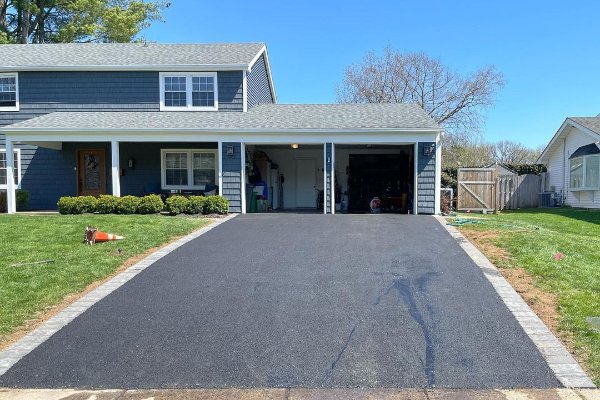
Old Irish Paving & Masonry installs, replaces, widens and repairs driveways in Keansburg, NJ, in asphalt, interlocking pavers, concrete and Belgian block. Every driveway is built on excavated, compacted stone base with drainage set away from your garage and home. Most asphalt driveways are completed in 1–2 days.
Keansburg driveways are usually short and narrow, so every inch counts. We maximize parking space, pitch toward the street and use materials that hold up to salt.
Sandy soils, a high water table, salt air and flood risk along Raritan Bay all shape how we build in Keansburg. That’s why every driveway we build starts with removing the old surface and soft soil, then installing and compacting a new stone base before a single inch of asphalt or paver goes down.
Key facts
Problems we solve
These are the issues we’re called about most in Keansburg and nearby Monmouth County: some are specific to local soils, terrain and housing, others are common across New Jersey.
What you seeRaised homes with temporary or failing steps and landings.
Why it happensElevation changes after flood mitigation.
How we fix itNew masonry or paver stairs and landings with safe, consistent risers and proper footings.
How to prevent itChoose materials that tolerate salt and flooding.
What you seePavers and driveways settling or shifting.
Why it happensLoose sandy soils that drain fast but compact poorly when wet.
How we fix itWell-graded, compacted base and edge restraints designed for sandy conditions.
How to prevent itMaintain edges and joints.
What you seeHard to fit two cars or a usable patio.
Why it happensCompact bayfront lots.
How we fix itSpace-efficient layouts and drainage that keeps water moving to the street.
How to prevent itPlan the whole front yard together.
What you seeCars park on the lawn, doors hit each other, or someone always has to move a car to get out.
Why it happensMany New Jersey driveways were built for one smaller car decades ago.
How we fix itWe widen with matching material on a full-depth base, add a parking pad or turnaround, and check your town’s limits on driveway width and curb cuts.
How to prevent itPlan for the cars you’ll own in ten years, not the ones you have today.
What you seeA patch of interconnected cracks that looks like reptile skin, usually in wheel paths or near the garage.
Why it happensThe base underneath has failed. Water got through surface cracks, softened the stone and soil, and the asphalt is now flexing under every car. It’s a structural failure, not a surface one.
How we fix itWe saw-cut around the failed area, dig out the asphalt and the wet base, install and compact new stone, then patch with hot-mix asphalt. If more than about a quarter of the driveway looks like this, full replacement is the better value.
How to prevent itSeal cracks as soon as they appear, keep downspouts discharging away from the driveway, and sealcoat every 2–3 years.
What you seeDips, waves or ruts in a paver driveway, patio or walk, often where cars turn or near downspouts.
Why it happensA base that was too thin, not compacted in lifts, or laid over soft clay without fabric, or too much bedding sand used to level a bad base.
How we fix itWe lift the pavers, remove the bedding and failed base, install and compact new stone in thin lifts (adding geotextile on clay), re-screed and reset the same pavers.
How to prevent itInsist on the right base depth for the use (about 6″ for patios, 8–12″ for driveways) and compaction in 2–3″ lifts.
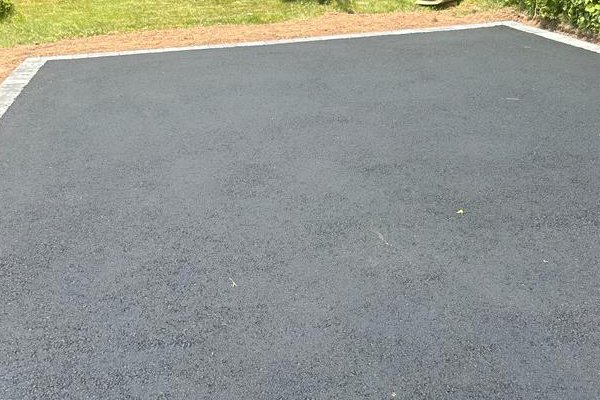
Isolated cracks, small potholes and faded asphalt are usually fixed with crack filling, patching and sealcoat. Widespread alligator cracking, sunken tire tracks, broken edges and standing water mean the base has failed, and replacement is the better value. Ask us to price both options so you can decide.
Plan with confidence
Reviews
★★★★★
I met with the owner Thomas, who gave me ideas and choices for the look I was trying to envision. The crew tore up my old cracked concrete patio and sidewalk and installed gorgeous new pavers. They did the work promptly and professionally and cleaned up well after the jobsite.
— Dawn G., Google review
★★★★★
Last month they did my backyard stoop, patio and walkway, and added a french drain to a sump pit in the yard. They did an amazing job! I highly recommend them for any paving and masonry work. Tom and crew are a pleasure to deal with.
— Bill P., Google review
★★★★★
Tom, his son, and their crew replaced our front walkway and steps and repaired a foundation wall on our home. They were here on time every morning and cleaned up before they left for the day. The quality of their work is outstanding.
— Kate L., Google review
FAQ
Most asphalt driveways take 1–2 days. Paver driveways take about 3–7 days, and concrete takes 3–5 days plus about a week of curing.
Often yes. Many New Jersey towns, Keansburg included, regulate driveway width, curb cuts and work in the road right-of-way. We’ll confirm what’s needed.
Yes. Salt air and floodwater are hard on masonry and pavement. We build on a well-compacted base, choose salt-tolerant materials and set pitch so water drains away quickly.
Yes. Belgian block curbing and aprons can be added to new or existing driveways.
No. Every 2–3 years is right for most driveways. Sealing too often builds up a film that can crack and peel.
Regrade the driveway so it pitches away from the garage, or install a trench drain across the driveway in front of the door, piped to a dry well or daylight.
Free, no-obligation quote
Tell us about your driveway, patio, steps or masonry project. Tom or a member of the family will call you back promptly to book a free on-site visit and a written quote.
Prefer to talk? (908) 992-2345