
Family-owned paving & masonry contractor serving New Jersey for 30+ years · Licensed & insured
New Jersey paving & masonry contractor
New asphalt driveways, private roads and parking lots, built on a properly excavated and compacted base so they last through New Jersey winters.
Three decades paving NJ properties
Fully licensed NJ contractor
Owner-led, hands-on projects
Written, no-obligation quotes
Overview
Quick answer
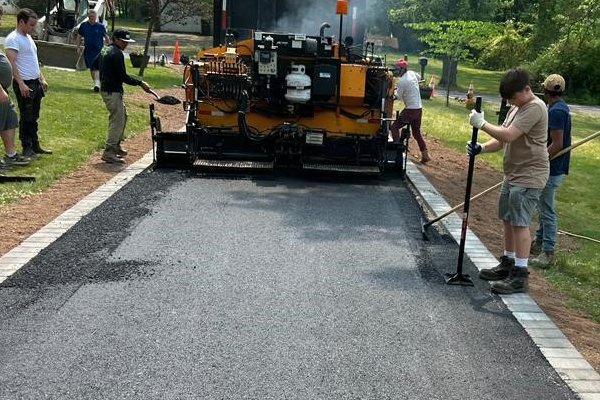
Old Irish Paving & Masonry installs hot-mix asphalt driveways, private roads and parking lots across New Jersey. We excavate to firm ground, install and compact a stone base, then lay and roll the asphalt to the right thickness and pitch. That base and drainage work is what decides how long the pavement lasts.
Asphalt (often called blacktop) is the most popular paving surface in New Jersey because it is cost-effective, quick to install and flexible enough to handle the state’s freeze-thaw cycles and road salt. But asphalt only performs as well as what is underneath it. Most early failures we’re called to fix (alligator cracking, sinking tire tracks, puddles at the garage) come from a thin or poorly compacted base, not from the asphalt itself.
Our family has paved driveways, private lanes and commercial lots in New Jersey for more than 30 years. Every job is quoted after a free site visit, so the depth of excavation, base and asphalt is matched to your soil, slope and the vehicles that will use it.
Key facts
Problems we solve
Most calls we get start with a problem, not a project. Here are the issues New Jersey homeowners and property managers bring to us most often, what causes them, and how we fix them for good.
What you seeHoles that you or a previous contractor filled with cold patch, only for them to reopen after the next freeze.
Why it happensCold patch from a bag doesn’t bond or compact properly, and the soft base underneath is still holding water. Each freeze-thaw cycle pops the patch out.
How we fix itA permanent repair is cut square, excavated to firm material, rebuilt with compacted stone, tack-coated and filled with hot-mix asphalt rolled flush.
How to prevent itFix potholes in the warm season with hot mix, and make sure water drains off the surface instead of sitting in low spots.
What you seeWater ponds near the garage door, along the edges or in tire ruts long after the rain stops.
Why it happensThe driveway was graded flat or sloped the wrong way, or the base has settled in spots. Standing water seeps into cracks and accelerates every other kind of damage.
How we fix itSmall birdbaths can sometimes be corrected with an infrared or hot-mix leveling patch. Where the overall pitch is wrong, the surface has to come out so the base can be regraded, sometimes with a trench drain or dry well added.
How to prevent itPitch matters most at installation. Ask any contractor exactly where water will go before they pave.
What you seeThe sides of the driveway are breaking off into the lawn, especially where cars drive close to the edge.
Why it happensAsphalt edges with no support underneath, or with base that stops short of the edge, crack under tire loads. Lawn sprinklers and runoff wash out the soil beside them.
How we fix itWe cut back to solid asphalt, extend and compact the base beyond the paved edge, repave, and often install Belgian block curbing to lock the edge in place.
How to prevent itBuild the base wider than the asphalt, tamp the edges at a bevel, and keep heavy vehicles off the outer foot of the driveway.
What you seeThe driveway has turned light gray, the stones are showing, and it feels rough underfoot.
Why it happensSun (UV), water and road salt oxidize the asphalt binder over time, making the surface brittle and porous.
How we fix itIf the surface is structurally sound, we fill cracks and sealcoat to restore color and protection. If the stone is coming loose (raveling), a 1.5–2″ overlay renews the surface.
How to prevent itSealcoat every 2–3 years starting 6–12 months after paving, and don’t over-seal yearly, which can cause peeling.
What you seeTwo depressions where the car always parks or drives, sometimes holding water.
Why it happensToo thin a base, poor compaction, or heavy vehicles (work trucks, RVs, dumpsters) on a driveway designed for cars.
How we fix itRuts mean the base deformed. Small areas are excavated and rebuilt. Widespread rutting calls for replacement with a thicker base and asphalt section sized for the heavier vehicles.
How to prevent itTell your contractor about any heavy vehicles before paving, and use plywood under dumpster wheels and trailer jacks.
What you seeA patch of interconnected cracks that looks like reptile skin, usually in wheel paths or near the garage.
Why it happensThe base underneath has failed. Water got through surface cracks, softened the stone and soil, and the asphalt is now flexing under every car. It’s a structural failure, not a surface one.
How we fix itWe saw-cut around the failed area, dig out the asphalt and the wet base, install and compact new stone, then patch with hot-mix asphalt. If more than about a quarter of the driveway looks like this, full replacement is the better value.
How to prevent itSeal cracks as soon as they appear, keep downspouts discharging away from the driveway, and sealcoat every 2–3 years.

New Jersey’s clay-heavy soils hold water. When water sits under a driveway and freezes, it lifts and cracks the surface. That’s why every job starts with the parts you won’t see when we’re done:
Tip: when comparing quotes, ask each contractor to write down the excavation depth, base depth and compacted asphalt thickness. If a quote doesn’t say, you can’t compare it.

Our process
Tom or a family member walks the property, measures, checks drainage and talks through materials and budget.
You get a clear, itemised quote covering excavation, base depth, materials, finish and clean-up. No pressure.
Our own crew excavates, builds the compacted base and installs the surface using quality materials.
We clean up, walk the finished job with you, explain aftercare and stand behind the work.
| Factor | Asphalt | Concrete | Interlocking pavers |
|---|---|---|---|
| Upfront cost | Lowest | Medium | Highest |
| Winter / road salt | Handles freeze-thaw and salt well | Can scale with salt if not sealed | Excellent; individual units can be lifted and reset |
| Maintenance | Sealcoat every 2–3 years | Seal periodically, joints may crack | Re-sand joints occasionally |
| Repairs | Easy patching | Hard to patch invisibly | Easy: replace individual pavers |
| Look | Clean, classic black | Smooth, light finish | Most design options |
Read our full guide: asphalt vs. concrete vs. pavers.
Fresh asphalt stays soft for a while, especially in summer. For the first few weeks avoid sharp turns with the steering wheel while the car is stopped, keep kickstands, trailer jacks and heavy dumpsters off the surface, and park in slightly different spots. Once the asphalt has cured (typically 6–12 months), a sealcoat every two to three years and filling cracks as they appear will add years to the surface.
Plan with confidence
| Season | What to do |
|---|---|
| Spring | Walk the driveway after the thaw. Note new cracks, potholes and puddles, and rinse off winter salt. |
| Summer | Best time for crack sealing, patching and sealcoating (dry days above 50°F). |
| Fall | Last chance for hot-mix repairs before the plants close. Clean out drains and gutters. |
| Winter | Use a plow shoe or rubber edge, avoid metal shovel edges, and use calcium chloride sparingly. |
Reviews
★★★★★
We just had our driveway and front walkway paved and outlined in Belgian block by Old Irish. The company handled the project with very good expertise and experience. The crew was hardworking and went the extra mile, ensuring we were satisfied with the project details from start to finish.
— James M., Google review
★★★★★
I met with the owner Thomas, who gave me ideas and choices for the look I was trying to envision. The crew tore up my old cracked concrete patio and sidewalk and installed gorgeous new pavers. They did the work promptly and professionally and cleaned up well after the jobsite.
— Dawn G., Google review
★★★★★
Last month they did my backyard stoop, patio and walkway, and added a french drain to a sump pit in the yard. They did an amazing job! I highly recommend them for any paving and masonry work. Tom and crew are a pleasure to deal with.
— Bill P., Google review
FAQ
A properly built asphalt driveway typically lasts 15–25 years in New Jersey. Base depth, drainage, how heavy the vehicles are and regular sealcoating and crack filling make the biggest difference.
For a typical home we recommend a compacted stone base of about 4–6 inches and 2–3 inches of compacted hot-mix asphalt. Soft soils, long lanes or heavy vehicles call for more. We confirm the right build after seeing the site.
Asphalt plants in New Jersey generally supply hot mix from about April through early December. Paving needs dry weather and ground and air temperatures above roughly 40–50°F, so spring through fall is ideal.
Sometimes. If the existing base is solid and the surface only has minor cracking, an overlay can work. If there is widespread alligator cracking, sinking or drainage problems, the old surface should be removed and the base rebuilt. See can you put new asphalt over old asphalt?
Cost depends on square footage, how much excavation and base work is needed, access, removal of the old surface, edging and the current price of asphalt. We give a free, written quote after a short site visit. Call (908) 992-2345.
Yes. We pave and repair parking lots, private roads and access drives for businesses, HOAs, churches and property managers. See commercial paving and parking lots.
Most recurring cracks come from water getting into the base, not from the asphalt itself. Seal cracks while they’re small, fix drainage, and if alligator cracking has spread, rebuild the base in that area.
No. Bagged cold patch is a temporary fix. A permanent repair is saw-cut, excavated, rebuilt with compacted stone and filled with hot-mix asphalt.
No. Every 2–3 years is right for most driveways. Sealing too often builds up a film that can crack and peel.
Free, no-obligation quote
Tell us about your driveway, patio, steps or masonry project. Tom or a member of the family will call you back promptly to book a free on-site visit and a written quote.
Prefer to talk? (908) 992-2345