
Family-owned paving & masonry contractor serving New Jersey for 30+ years · Licensed & insured
Serving Hazlet & Monmouth County
New asphalt, paver and concrete driveways, plus widening, Belgian block, repairs and sealcoating for Hazlet, NJ homes.
Three decades paving NJ properties
Fully licensed NJ contractor
Owner-led, hands-on projects
Written, no-obligation quotes
Hazlet, NJ
Quick answer
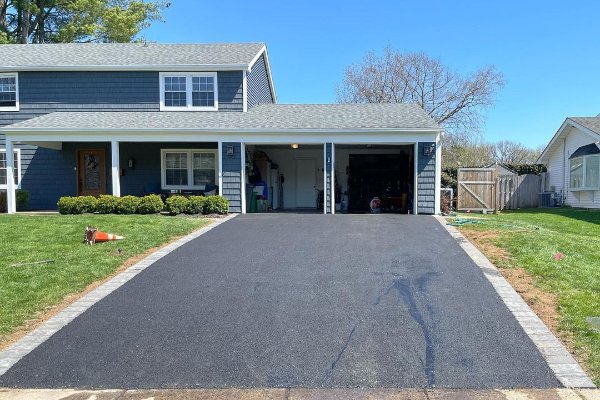
Old Irish Paving & Masonry installs, replaces, widens and repairs driveways in Hazlet, NJ, in asphalt, interlocking pavers, concrete and Belgian block. Every driveway is built on excavated, compacted stone base with drainage set away from your garage and home. Most asphalt driveways are completed in 1–2 days.
Original Hazlet driveways are often cracked concrete or thin asphalt. We replace them with properly based asphalt or pavers, often widening for a second car.
Being close to Raritan Bay means sandier soils in places, salt in the air and heavy coastal storms, all of which affect masonry joints and paving edges. That’s why every driveway we build starts with removing the old surface and soft soil, then installing and compacting a new stone base before a single inch of asphalt or paver goes down.
Key facts
Problems we solve
These are the issues we’re called about most in Hazlet and nearby Monmouth County: some are specific to local soils, terrain and housing, others are common across New Jersey.
What you seeCracked, settling stoops pulling away from 1950s–70s homes.
Why it happensNo frost footing, plus decades of salt and freeze-thaw.
How we fix itFull stoop replacement on a proper footing in brick, stone or pavers.
How to prevent itAvoid rock salt on masonry.
What you seeFaster wear on masonry joints, paving edges and metal railings.
Why it happensProximity to Raritan Bay and coastal storms.
How we fix itSalt-tolerant materials, well-compacted bases and good drainage.
How to prevent itRinse salt off surfaces in spring.
What you seeCracked, heaved back patios.
Why it happensOriginal slabs poured without a base or joints.
How we fix itReplacement with pavers on a compacted base.
How to prevent itPitch away from the house.
What you seeA lip has formed at the apron, the sidewalk or the garage slab.
Why it happensDifferent materials settle at different rates, and tree roots and frost lift edges.
How we fix itWe remove and rebuild the transition with a compacted base. At the street we can install a Belgian block or paver apron that ages well.
How to prevent itMake transitions part of the original design rather than an afterthought.
What you seeThe driveway has turned light gray, the stones are showing, and it feels rough underfoot.
Why it happensSun (UV), water and road salt oxidize the asphalt binder over time, making the surface brittle and porous.
How we fix itIf the surface is structurally sound, we fill cracks and sealcoat to restore color and protection. If the stone is coming loose (raveling), a 1.5–2″ overlay renews the surface.
How to prevent itSealcoat every 2–3 years starting 6–12 months after paving, and don’t over-seal yearly, which can cause peeling.
What you seeChalky white film (efflorescence), oil spots, rust marks or dull color.
Why it happensEfflorescence is natural salts migrating out of concrete pavers. Oil and rust come from cars, fertilizer and furniture, and UV fades color over time.
How we fix itWe clean with the correct product for each stain, then optionally apply a sealer to enhance color and make future cleaning easier.
How to prevent itWipe up oil quickly, keep fertilizer off pavers, and seal if you want a richer, easier-to-clean surface.
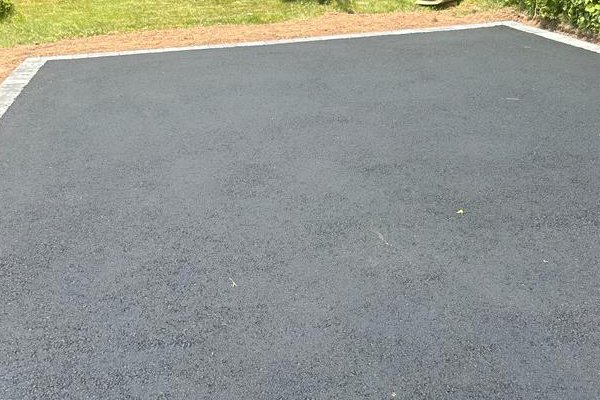
Isolated cracks, small potholes and faded asphalt are usually fixed with crack filling, patching and sealcoat. Widespread alligator cracking, sunken tire tracks, broken edges and standing water mean the base has failed, and replacement is the better value. Ask us to price both options so you can decide.
Plan with confidence
Reviews
★★★★★
My sister hired Old Irish for cellar stairs and basement wall work. They arrived early, never left until 5 or after, and always cleaned up. They also told her about leakage inside her foundation and did a great job fixing it.
— Connie B., Google review
★★★★★
Last fall the Old Irish Paving crew repaired our front slate porch and our paver walkway and they did a great job! They came back to complete a minor repair and we are very happy. We are considering using them again for another project.
— Kathleen N., Google review
★★★★★
Wow! What an amazing paving & masonry company. This family-owned company is so knowledgeable and professional. The team gave our home such a clean and upgraded look.
— John Q., Google review
FAQ
Most asphalt driveways take 1–2 days. Paver driveways take about 3–7 days, and concrete takes 3–5 days plus about a week of curing.
Often yes. Many New Jersey towns, Hazlet included, regulate driveway width, curb cuts and work in the road right-of-way. We’ll confirm what’s needed.
Yes. We demolish the old stoop, pour a proper footing and build a new stoop in brick, stone, pavers or concrete with safe, even steps. See front stoop replacement in Hazlet.
Yes. Belgian block curbing and aprons can be added to new or existing driveways.
No. Bagged cold patch is a temporary fix. A permanent repair is saw-cut, excavated, rebuilt with compacted stone and filled with hot-mix asphalt.
No. Every 2–3 years is right for most driveways. Sealing too often builds up a film that can crack and peel.
Free, no-obligation quote
Tell us about your driveway, patio, steps or masonry project. Tom or a member of the family will call you back promptly to book a free on-site visit and a written quote.
Prefer to talk? (908) 992-2345