
Family-owned paving & masonry contractor serving New Jersey for 30+ years · Licensed & insured
New Jersey paving & masonry contractor
New, replacement and widened blacktop driveways that drain properly, look sharp and hold up to New Jersey winters.
Three decades paving NJ properties
Fully licensed NJ contractor
Owner-led, hands-on projects
Written, no-obligation quotes
Overview
Quick answer
A blacktop driveway is hot-mix asphalt laid over a compacted stone base. Old Irish Paving & Masonry removes the old driveway, corrects drainage, installs and compacts new base stone, then paves and rolls the blacktop, usually in one to two days for a typical home in New Jersey.
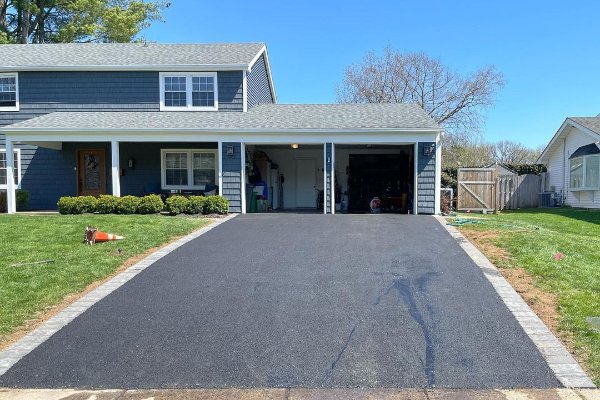
Your driveway is the first thing people see and something you use every day. A cracked, patched or puddling driveway drags down the whole property, while a fresh blacktop driveway with crisp edges and a Belgian block border instantly lifts curb appeal.
“Blacktop” and “asphalt” are the same material: a mix of stone aggregate and liquid asphalt binder, delivered hot and compacted with heavy rollers. It’s the most common choice for New Jersey driveways because it handles snow plows, salt and freeze-thaw better than most surfaces, and it’s easy to repair.

Key facts
Problems we solve
Most calls we get start with a problem, not a project. Here are the issues New Jersey homeowners and property managers bring to us most often, what causes them, and how we fix them for good.
What you seeA patch of interconnected cracks that looks like reptile skin, usually in wheel paths or near the garage.
Why it happensThe base underneath has failed. Water got through surface cracks, softened the stone and soil, and the asphalt is now flexing under every car. It’s a structural failure, not a surface one.
How we fix itWe saw-cut around the failed area, dig out the asphalt and the wet base, install and compact new stone, then patch with hot-mix asphalt. If more than about a quarter of the driveway looks like this, full replacement is the better value.
How to prevent itSeal cracks as soon as they appear, keep downspouts discharging away from the driveway, and sealcoat every 2–3 years.
What you seeCars park on the lawn, doors hit each other, or someone always has to move a car to get out.
Why it happensMany New Jersey driveways were built for one smaller car decades ago.
How we fix itWe widen with matching material on a full-depth base, add a parking pad or turnaround, and check your town’s limits on driveway width and curb cuts.
How to prevent itPlan for the cars you’ll own in ten years, not the ones you have today.
What you seeHoles that you or a previous contractor filled with cold patch, only for them to reopen after the next freeze.
Why it happensCold patch from a bag doesn’t bond or compact properly, and the soft base underneath is still holding water. Each freeze-thaw cycle pops the patch out.
How we fix itA permanent repair is cut square, excavated to firm material, rebuilt with compacted stone, tack-coated and filled with hot-mix asphalt rolled flush.
How to prevent itFix potholes in the warm season with hot mix, and make sure water drains off the surface instead of sitting in low spots.
What you seeWater pools at the garage door or seeps under it after storms.
Why it happensThe driveway slopes toward the house, has settled near the slab, or there’s simply nowhere for water from a sloped driveway to go.
How we fix itWe regrade the base so water runs away from the house, or install a trench drain across the driveway in front of the garage, piped to daylight or a dry well.
How to prevent itKeep the joint between the driveway and garage slab sealed, and keep downspouts discharging away from the driveway.
What you seeWater ponds near the garage door, along the edges or in tire ruts long after the rain stops.
Why it happensThe driveway was graded flat or sloped the wrong way, or the base has settled in spots. Standing water seeps into cracks and accelerates every other kind of damage.
How we fix itSmall birdbaths can sometimes be corrected with an infrared or hot-mix leveling patch. Where the overall pitch is wrong, the surface has to come out so the base can be regraded, sometimes with a trench drain or dry well added.
How to prevent itPitch matters most at installation. Ask any contractor exactly where water will go before they pave.
What you seeSlabs have cracked, lifted at the joints, or the surface is flaking off in patches.
Why it happensFreeze-thaw, road salt, tree roots, a weak base or concrete poured without air entrainment and proper control joints.
How we fix itIsolated slabs can be removed and repoured. If the whole driveway is scaling or heaving, replacing it with new concrete, asphalt or pavers on a properly built base is the lasting fix.
How to prevent itAvoid rock salt and ammonium-based de-icers, and seal concrete every few years.

Our process
Tom or a family member walks the property, measures, checks drainage and talks through materials and budget.
You get a clear, itemised quote covering excavation, base depth, materials, finish and clean-up. No pressure.
Our own crew excavates, builds the compacted base and installs the surface using quality materials.
We clean up, walk the finished job with you, explain aftercare and stand behind the work.
Small cracks, minor potholes and faded color can usually be fixed with crack filling, patching and sealcoating. Replacement is the better value when you see widespread “alligator” cracking, sunken wheel tracks, standing water, broken edges, or a driveway that’s past 20 years old. We’ll tell you honestly which makes sense. See driveway repair vs. installation.
Plan with confidence
| Season | What to do |
|---|---|
| Spring | Walk the driveway after the thaw. Note new cracks, potholes and puddles, and rinse off winter salt. |
| Summer | Best time for crack sealing, patching and sealcoating (dry days above 50°F). |
| Fall | Last chance for hot-mix repairs before the plants close. Clean out drains and gutters. |
| Winter | Use a plow shoe or rubber edge, avoid metal shovel edges, and use calcium chloride sparingly. |
Reviews
★★★★★
I couldn't be happier with the work Old Irish Paving did on my driveway! The team was professional, efficient, and the quality of their work is outstanding. They made the whole process stress-free from start to finish.
— Angel G., Google review
★★★★★
Old Irish put in a patio for us and we are extremely happy with the patio and their service. They were very responsive and got the job done very quickly. The patio and concrete pad underneath our hot tub look amazing!
— Alyssa M., Google review
★★★★★
My sister hired Old Irish for cellar stairs and basement wall work. They arrived early, never left until 5 or after, and always cleaned up. They also told her about leakage inside her foundation and did a great job fixing it.
— Connie B., Google review
FAQ
Usually after 2–3 days, and longer in hot weather. Avoid turning the wheel while parked, and keep heavy trucks, dumpsters and trailer jacks off it for the first few weeks.
Wait about 6–12 months for the asphalt to cure, then sealcoat every 2–3 years.
Yes. We install Belgian block curbing and aprons with new driveways or add them to existing ones.
Yes, when the base is regraded. Correct pitch, and if needed a trench drain or swale, is part of our installation.
Many New Jersey towns require a permit to widen a driveway, change a curb cut or work in the right-of-way. We’ll tell you what your town requires during the estimate.
Most recurring cracks come from water getting into the base, not from the asphalt itself. Seal cracks while they’re small, fix drainage, and if alligator cracking has spread, rebuild the base in that area.
No. Bagged cold patch is a temporary fix. A permanent repair is saw-cut, excavated, rebuilt with compacted stone and filled with hot-mix asphalt.
No. Every 2–3 years is right for most driveways. Sealing too often builds up a film that can crack and peel.
Regrade the driveway so it pitches away from the garage, or install a trench drain across the driveway in front of the door, piped to a dry well or daylight.
You can, but it rarely looks or performs right next to asphalt or pavers, and many towns limit driveway width. A paved widening on a matching base is the lasting fix.
Free, no-obligation quote
Tell us about your driveway, patio, steps or masonry project. Tom or a member of the family will call you back promptly to book a free on-site visit and a written quote.
Prefer to talk? (908) 992-2345