
Family-owned paving & masonry contractor serving New Jersey for 30+ years · Licensed & insured
New Jersey paving & masonry contractor
Asphalt, paver and concrete paving for businesses, property managers, HOAs, churches and schools, planned around your operations.
Three decades paving NJ properties
Fully licensed NJ contractor
Owner-led, hands-on projects
Written, no-obligation quotes
Overview
Quick answer
Old Irish Paving & Masonry handles commercial paving in New Jersey: asphalt parking lots and access roads, interlocking paver entrances and plazas, concrete sidewalks, curbs and pads, plus ongoing repair, sealcoating and striping. We give detailed written proposals and phase the work to limit disruption.
Commercial properties take far more traffic and weight than a home driveway, from delivery trucks and garbage trucks to snow plows. Pavement has to be designed for that load, drain properly, and meet accessibility expectations. We bring the same family-run care to commercial work that we do for homeowners, with the scheduling flexibility businesses need.
Key facts
Problems we solve
Most calls we get start with a problem, not a project. Here are the issues New Jersey homeowners and property managers bring to us most often, what causes them, and how we fix them for good.
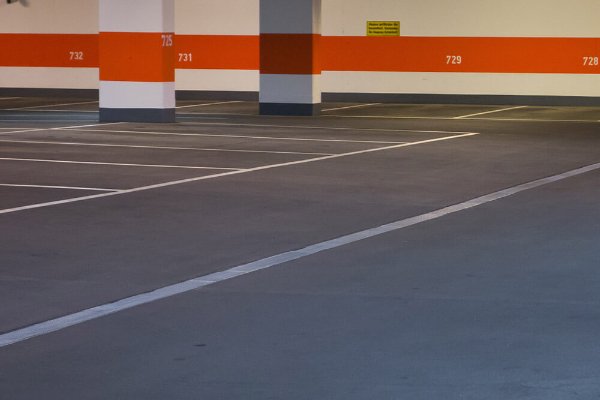
What you seeLines you can’t see, confusing traffic flow, unclear accessible parking.
Why it happensWear and sealcoating without re-striping.
How we fix itWe sealcoat and re-stripe stalls, arrows, fire lanes and accessible spaces.
How to prevent itRe-stripe after every sealcoat.
What you seeSlabs have dropped at one end, creating a step or a puddle.
Why it happensBase washout, poor compaction or erosion under the slab.
How we fix itWe remove and repour on a compacted base, correcting drainage.
How to prevent itKeep water from running under slabs.
What you seeLoose stones, rough texture and a gray, oxidized surface.
Why it happensAge and UV, often with no sealcoat history.
How we fix itMill and overlay when the base is sound, or a full-depth rebuild where it has failed.
How to prevent itSealcoat every 2–3 years.
What you seeThe section where the driveway meets the road is cracked, broken or sunk.
Why it happensAprons take the heaviest loads (plows, trucks, turning) and are often thinner than they should be, with poor base at the curb line.
How we fix itWe remove the apron, compact a proper base, and repour thicker reinforced concrete, or install a Belgian block or paver apron that handles loads well.
How to prevent itKeep heavy trucks off the apron edge and make sure your town’s curb and sidewalk specs are followed.
What you seeBroken curbs, trip hazards at entrances and failing ramps.
Why it happensVehicle impacts, plows, frost and roots.
How we fix itWe replace damaged curb and sidewalk sections and rebuild accessible ramps.
How to prevent itInstall wheel stops where cars hit curbs.
What you seeSmall craters (popouts) or pitting across the surface.
Why it happensPorous aggregate near the surface absorbing water and expanding when frozen, or poor finishing.
How we fix itMinor pitting can be cleaned and sealed. Heavy damage calls for resurfacing or replacement with a better mix.
How to prevent itSeal regularly and avoid harsh de-icers.
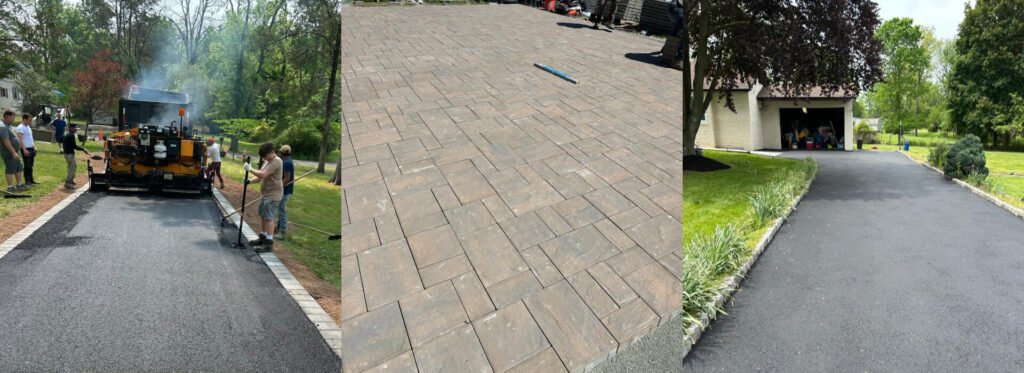
Commercial pavement fails when it’s built like a driveway. Where trucks turn, load or park, we increase base depth and asphalt thickness, and use concrete pads where dumpsters sit. Drainage is designed so water reaches catch basins instead of ponding and freezing in walkways.
Our process
Tom or a family member walks the property, measures, checks drainage and talks through materials and budget.
You get a clear, itemised quote covering excavation, base depth, materials, finish and clean-up. No pressure.
Our own crew excavates, builds the compacted base and installs the surface using quality materials.
We clean up, walk the finished job with you, explain aftercare and stand behind the work.
See our local commercial pages for Edison and Long Valley, or our full service area.
Many property managers can’t do everything in one season, and they don’t have to. We survey the property, rank problems by safety and urgency, and lay out a two-to-three-year plan: fix hazards and failed areas now, crack seal and sealcoat to buy time, and schedule overlays or reconstruction when budgets allow.
Plan with confidence
| Season | What to do |
|---|---|
| Spring | Survey the post-winter damage. |
| Summer | Sealcoat and stripe. |
| Fall | Patch before freeze-up. |
| Winter | Plow carefully and mark drains. |
Reviews
★★★★★
Last fall the Old Irish Paving crew repaired our front slate porch and our paver walkway and they did a great job! They came back to complete a minor repair and we are very happy. We are considering using them again for another project.
— Kathleen N., Google review
★★★★★
Wow! What an amazing paving & masonry company. This family-owned company is so knowledgeable and professional. The team gave our home such a clean and upgraded look.
— John Q., Google review
★★★★★
We just had our driveway and front walkway paved and outlined in Belgian block by Old Irish. The company handled the project with very good expertise and experience. The crew was hardworking and went the extra mile, ensuring we were satisfied with the project details from start to finish.
— James M., Google review
FAQ
Yes. We can provide a certificate of insurance naming your company or property manager before work begins.
Where it’s practical and allowed by local ordinances, we can schedule evening or weekend work and phase projects so part of the property stays open.
We can set up a recurring schedule for crack sealing, sealcoating, striping and patching so you can budget ahead.
Yes. We build commercial-grade paver installations with deeper bases and edge restraints designed for vehicle traffic.
Typically every 2–3 years, with crack sealing every 1–2 years and re-striping after each sealcoat.
Garbage trucks put heavy loads on a small area. A reinforced concrete pad there prevents repeated failures.
Surface scaling is caused by freeze-thaw and de-icing salts, especially on non-air-entrained concrete. Avoid rock salt and seal concrete every few years.
Free, no-obligation quote
Tell us about your driveway, patio, steps or masonry project. Tom or a member of the family will call you back promptly to book a free on-site visit and a written quote.
Prefer to talk? (908) 992-2345