
Family-owned paving & masonry contractor serving New Jersey for 30+ years · Licensed & insured
Serving Flanders & Morris County
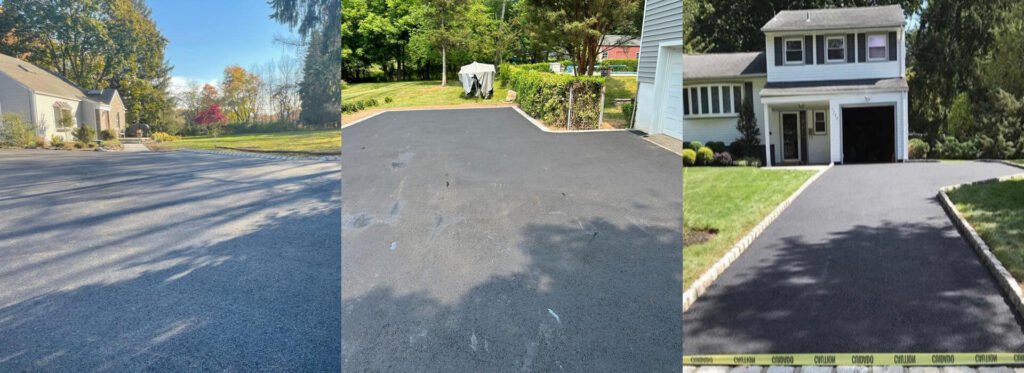
New blacktop driveways, private roads, parking lots, overlays and repairs in Flanders, NJ, built on a compacted stone base.
Three decades paving NJ properties
Fully licensed NJ contractor
Owner-led, hands-on projects
Written, no-obligation quotes
Flanders, NJ
Quick answer
Old Irish Paving & Masonry provides asphalt paving in Flanders, NJ, including new and replacement blacktop driveways, private roads, parking lots, overlays, patching and sealcoating. Typical residential builds include excavation, a 4–6 inch compacted stone base and 2–3 inches of compacted hot-mix asphalt, adjusted to your soil and traffic.
We pave driveways for single-family homes and work with HOAs and property managers on community roads and parking areas around Flanders.
Hilly terrain and glacial, rocky soils make drainage and base compaction the key to long-lasting paving in Flanders. Asphalt is flexible and handles winter plowing and salt well, but only when the base underneath is solid and the surface drains.
Key facts
Problems we solve
These are the issues we’re called about most in Flanders and nearby Morris County: some are specific to local soils, terrain and housing, others are common across New Jersey.
What you seeAlligator cracking, sunken edges and patches on 25–35-year-old driveways.
Why it happensBuilder-grade base from the original construction, plus decades of freeze-thaw.
How we fix itFull replacement with a compacted base, often widened for extra vehicles.
How to prevent itSealcoat every 2–3 years and crack-fill promptly.
What you seeSettled stoops, cracked walks and trip hazards across multiple units.
Why it happensUniform construction from the same era means problems appear at the same time.
How we fix itPhased repair and replacement programs with written proposals for HOA boards.
How to prevent itAnnual inspections by the community to catch hazards early.
What you seeLarge rocks and cobbles turn up when digging for walls and patios.
Why it happensMorris County’s glacial soils.
How we fix itWe screen, remove or reuse stone and adjust base design to firm conditions.
How to prevent itExpect some rock and build it into the plan.
What you seeHoles that you or a previous contractor filled with cold patch, only for them to reopen after the next freeze.
Why it happensCold patch from a bag doesn’t bond or compact properly, and the soft base underneath is still holding water. Each freeze-thaw cycle pops the patch out.
How we fix itA permanent repair is cut square, excavated to firm material, rebuilt with compacted stone, tack-coated and filled with hot-mix asphalt rolled flush.
How to prevent itFix potholes in the warm season with hot mix, and make sure water drains off the surface instead of sitting in low spots.
What you seeA lip has formed at the apron, the sidewalk or the garage slab.
Why it happensDifferent materials settle at different rates, and tree roots and frost lift edges.
How we fix itWe remove and rebuild the transition with a compacted base. At the street we can install a Belgian block or paver apron that ages well.
How to prevent itMake transitions part of the original design rather than an afterthought.
What you seeWater ponds near the garage door, along the edges or in tire ruts long after the rain stops.
Why it happensThe driveway was graded flat or sloped the wrong way, or the base has settled in spots. Standing water seeps into cracks and accelerates every other kind of damage.
How we fix itSmall birdbaths can sometimes be corrected with an infrared or hot-mix leveling patch. Where the overall pitch is wrong, the surface has to come out so the base can be regraded, sometimes with a trench drain or dry well added.
How to prevent itPitch matters most at installation. Ask any contractor exactly where water will go before they pave.

HOAs, townhouse communities and businesses along Route 206 use us for parking area paving, patching and sealcoating. See commercial paving for details.
Plan with confidence
Reviews
★★★★★
I met with the owner Thomas, who gave me ideas and choices for the look I was trying to envision. The crew tore up my old cracked concrete patio and sidewalk and installed gorgeous new pavers. They did the work promptly and professionally and cleaned up well after the jobsite.
— Dawn G., Google review
★★★★★
Last month they did my backyard stoop, patio and walkway, and added a french drain to a sump pit in the yard. They did an amazing job! I highly recommend them for any paving and masonry work. Tom and crew are a pleasure to deal with.
— Bill P., Google review
★★★★★
Tom, his son, and their crew replaced our front walkway and steps and repaired a foundation wall on our home. They were here on time every morning and cleaned up before they left for the day. The quality of their work is outstanding.
— Kate L., Google review
FAQ
Typically 15–25 years with good base work, drainage, sealcoating every 2–3 years and prompt crack filling.
Only if the base is sound and the surface has minor damage. Otherwise we remove it and rebuild. See paving over old asphalt.
Yes. We provide written proposals for HOA boards and property managers for driveway, roadway, parking area, walkway and stoop projects.
Usually after 2–3 days, longer in hot weather. Avoid sharp turns while stationary for the first few weeks.
Regrade the driveway so it pitches away from the garage, or install a trench drain across the driveway in front of the door, piped to a dry well or daylight.
You can, but it rarely looks or performs right next to asphalt or pavers, and many towns limit driveway width. A paved widening on a matching base is the lasting fix.
Free, no-obligation quote
Tell us about your driveway, patio, steps or masonry project. Tom or a member of the family will call you back promptly to book a free on-site visit and a written quote.
Prefer to talk? (908) 992-2345