
Family-owned paving & masonry contractor serving New Jersey for 30+ years · Licensed & insured
Serving Long Valley & Morris County
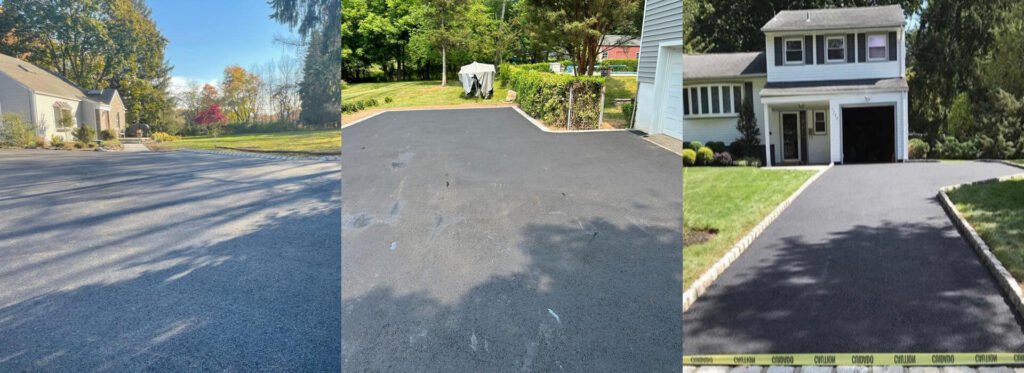
New blacktop driveways, private roads, parking lots, overlays and repairs in Long Valley, NJ, built on a compacted stone base.
Three decades paving NJ properties
Fully licensed NJ contractor
Owner-led, hands-on projects
Written, no-obligation quotes
Long Valley, NJ
Quick answer
Old Irish Paving & Masonry provides asphalt paving in Long Valley, NJ, including new and replacement blacktop driveways, private roads, parking lots, overlays, patching and sealcoating. Typical residential builds include excavation, a 4–6 inch compacted stone base and 2–3 inches of compacted hot-mix asphalt, adjusted to your soil and traffic.
Long Valley asphalt projects are often long private drives and lanes that need careful grading and thicker sections.
Steep grades, rock ledge and heavy runoff, especially on Schooley’s Mountain, demand strong bases, crowned surfaces and proper drainage. Asphalt is flexible and handles winter plowing and salt well, but only when the base underneath is solid and the surface drains.

Key facts
Problems we solve
These are the issues we’re called about most in Long Valley and nearby Morris County: some are specific to local soils, terrain and housing, others are common across New Jersey.
What you seeWashed-out edges, slick winter surfaces and runoff damage.
Why it happensSteep grades and heavy runoff.
How we fix itHeavier base, crowned surfaces, swales, culverts and Belgian block edges.
How to prevent itClear drainage each season.
What you seeLedge and large stones when digging.
Why it happensRocky glacial terrain.
How we fix itProper equipment and design adjustments, priced transparently.
How to prevent itExpect it and plan for it.
What you seeErosion and unusable slopes.
Why it happensHillside lots.
How we fix itRetaining walls and terraced patios with drainage.
How to prevent itKeep downspouts away from walls.
What you seeTwo depressions where the car always parks or drives, sometimes holding water.
Why it happensToo thin a base, poor compaction, or heavy vehicles (work trucks, RVs, dumpsters) on a driveway designed for cars.
How we fix itRuts mean the base deformed. Small areas are excavated and rebuilt. Widespread rutting calls for replacement with a thicker base and asphalt section sized for the heavier vehicles.
How to prevent itTell your contractor about any heavy vehicles before paving, and use plywood under dumpster wheels and trailer jacks.
What you seeCars park on the lawn, doors hit each other, or someone always has to move a car to get out.
Why it happensMany New Jersey driveways were built for one smaller car decades ago.
How we fix itWe widen with matching material on a full-depth base, add a parking pad or turnaround, and check your town’s limits on driveway width and curb cuts.
How to prevent itPlan for the cars you’ll own in ten years, not the ones you have today.
What you seeA patch of interconnected cracks that looks like reptile skin, usually in wheel paths or near the garage.
Why it happensThe base underneath has failed. Water got through surface cracks, softened the stone and soil, and the asphalt is now flexing under every car. It’s a structural failure, not a surface one.
How we fix itWe saw-cut around the failed area, dig out the asphalt and the wet base, install and compact new stone, then patch with hot-mix asphalt. If more than about a quarter of the driveway looks like this, full replacement is the better value.
How to prevent itSeal cracks as soon as they appear, keep downspouts discharging away from the driveway, and sealcoat every 2–3 years.
| Layer | What we do | Why it matters |
|---|---|---|
| Subgrade | Excavate soft soil, grade for drainage | Prevents sinking and puddles |
| Fabric | Geotextile over soft clay (when needed) | Keeps stone from pushing into the soil |
| Stone base | 4–6″+ quarry-processed stone, compacted | Carries the load and resists frost |
| Asphalt | 2–3″+ hot mix, rolled hot | Dense, smooth, watertight surface |
Our process
Tom or a family member walks the property, measures, checks drainage and talks through materials and budget.
You get a clear, itemised quote covering excavation, base depth, materials, finish and clean-up. No pressure.
Our own crew excavates, builds the compacted base and installs the surface using quality materials.
We clean up, walk the finished job with you, explain aftercare and stand behind the work.
Farms, shops and businesses in Long Valley rely on us for parking areas and access drives. See commercial paving for details.
Plan with confidence
Reviews
★★★★★
Last fall the Old Irish Paving crew repaired our front slate porch and our paver walkway and they did a great job! They came back to complete a minor repair and we are very happy. We are considering using them again for another project.
— Kathleen N., Google review
★★★★★
Wow! What an amazing paving & masonry company. This family-owned company is so knowledgeable and professional. The team gave our home such a clean and upgraded look.
— John Q., Google review
★★★★★
We just had our driveway and front walkway paved and outlined in Belgian block by Old Irish. The company handled the project with very good expertise and experience. The crew was hardworking and went the extra mile, ensuring we were satisfied with the project details from start to finish.
— James M., Google review
FAQ
Typically 15–25 years with good base work, drainage, sealcoating every 2–3 years and prompt crack filling.
Only if the base is sound and the surface has minor damage. Otherwise we remove it and rebuild. See paving over old asphalt.
Yes. We grade, base and compact steep driveways carefully, and add drainage swales, culverts or trench drains so runoff doesn’t wash out the edges.
Usually after 2–3 days, longer in hot weather. Avoid sharp turns while stationary for the first few weeks.
No. Every 2–3 years is right for most driveways. Sealing too often builds up a film that can crack and peel.
Regrade the driveway so it pitches away from the garage, or install a trench drain across the driveway in front of the door, piped to a dry well or daylight.
Free, no-obligation quote
Tell us about your driveway, patio, steps or masonry project. Tom or a member of the family will call you back promptly to book a free on-site visit and a written quote.
Prefer to talk? (908) 992-2345