
Family-owned paving & masonry contractor serving New Jersey for 30+ years · Licensed & insured
Serving Bridgewater & Somerset County
New asphalt, paver and concrete driveways, plus widening, Belgian block, repairs and sealcoating for Bridgewater, NJ homes.
Three decades paving NJ properties
Fully licensed NJ contractor
Owner-led, hands-on projects
Written, no-obligation quotes
Bridgewater, NJ
Quick answer
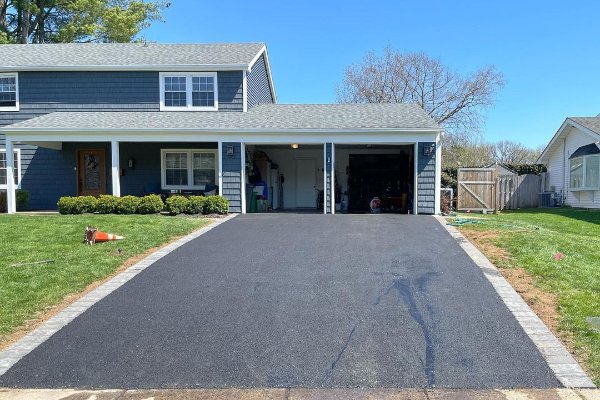
Old Irish Paving & Masonry installs, replaces, widens and repairs driveways in Bridgewater, NJ, in asphalt, interlocking pavers, concrete and Belgian block. Every driveway is built on excavated, compacted stone base with drainage set away from your garage and home. Most asphalt driveways are completed in 1–2 days.
Many Bridgewater driveways built in the 1980s and ’90s are now reaching the end of their life. Two-car widening, a paver apron and Belgian block curbs are our most requested upgrades here, especially on the sloped lots north of Route 22 where proper pitch keeps water out of garages.
Land near the Raritan River is flat and can stay wet, while the northern neighborhoods climb toward the Watchung ridge with steeper driveways and shale-and-clay soils that need careful base work. That’s why every driveway we build starts with removing the old surface and soft soil, then installing and compacting a new stone base before a single inch of asphalt or paver goes down.
Key facts
Problems we solve
These are the issues we’re called about most in Bridgewater and nearby Somerset County: some are specific to local soils, terrain and housing, others are common across New Jersey.
What you seeOn sloped lots toward the Watchung ridge, storm water runs the length of the driveway and pools at the garage door.
Why it happensSteep grades with no interception point. Shale-and-clay soils don’t absorb runoff quickly.
How we fix itA trench drain across the driveway at the garage, piped to a swale or dry well, plus a regraded base so water is carried to the sides.
How to prevent itKeep the trench drain grate clear of leaves each fall.
What you seeThin asphalt or cracked concrete that has been patched for decades, often too narrow for two cars.
Why it happensDriveways from that era were often laid with minimal base, for one car.
How we fix itFull tear-out, new compacted base, and widening to a two-car layout within township limits.
How to prevent itBuild for today’s vehicles and add Belgian block edges to stop lawn creep.
What you seeA widening gap where the concrete stoop meets the house.
Why it happensStoops poured without frost footings settle independently of the foundation.
How we fix itDemolish and rebuild on a proper footing, often finished in brick with bluestone treads.
How to prevent itSeal the joint at the house and keep downspouts away from the stoop.
What you seeA lip has formed at the apron, the sidewalk or the garage slab.
Why it happensDifferent materials settle at different rates, and tree roots and frost lift edges.
How we fix itWe remove and rebuild the transition with a compacted base. At the street we can install a Belgian block or paver apron that ages well.
How to prevent itMake transitions part of the original design rather than an afterthought.
What you seeWater ponds near the garage door, along the edges or in tire ruts long after the rain stops.
Why it happensThe driveway was graded flat or sloped the wrong way, or the base has settled in spots. Standing water seeps into cracks and accelerates every other kind of damage.
How we fix itSmall birdbaths can sometimes be corrected with an infrared or hot-mix leveling patch. Where the overall pitch is wrong, the surface has to come out so the base can be regraded, sometimes with a trench drain or dry well added.
How to prevent itPitch matters most at installation. Ask any contractor exactly where water will go before they pave.
What you seeChalky white film (efflorescence), oil spots, rust marks or dull color.
Why it happensEfflorescence is natural salts migrating out of concrete pavers. Oil and rust come from cars, fertilizer and furniture, and UV fades color over time.
How we fix itWe clean with the correct product for each stain, then optionally apply a sealer to enhance color and make future cleaning easier.
How to prevent itWipe up oil quickly, keep fertilizer off pavers, and seal if you want a richer, easier-to-clean surface.
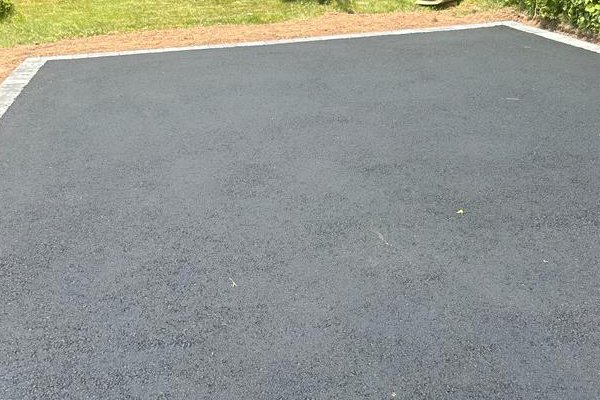
Isolated cracks, small potholes and faded asphalt are usually fixed with crack filling, patching and sealcoat. Widespread alligator cracking, sunken tire tracks, broken edges and standing water mean the base has failed, and replacement is the better value. Ask us to price both options so you can decide.
Plan with confidence
Reviews
★★★★★
Tom, his son, and their crew replaced our front walkway and steps and repaired a foundation wall on our home. They were here on time every morning and cleaned up before they left for the day. The quality of their work is outstanding.
— Kate L., Google review
★★★★★
I couldn't be happier with the work Old Irish Paving did on my driveway! The team was professional, efficient, and the quality of their work is outstanding. They made the whole process stress-free from start to finish.
— Angel G., Google review
★★★★★
Old Irish put in a patio for us and we are extremely happy with the patio and their service. They were very responsive and got the job done very quickly. The patio and concrete pad underneath our hot tub look amazing!
— Alyssa M., Google review
FAQ
Most asphalt driveways take 1–2 days. Paver driveways take about 3–7 days, and concrete takes 3–5 days plus about a week of curing.
Often yes. Many New Jersey towns, Bridgewater included, regulate driveway width, curb cuts and work in the road right-of-way. We’ll confirm what’s needed.
Yes. We work throughout Bridgewater Township, including Finderne, Bradley Gardens, Green Knoll and Martinsville, as well as neighboring Somerville, Raritan and Branchburg.
Yes. Belgian block curbing and aprons can be added to new or existing driveways.
Regrade the driveway so it pitches away from the garage, or install a trench drain across the driveway in front of the door, piped to a dry well or daylight.
You can, but it rarely looks or performs right next to asphalt or pavers, and many towns limit driveway width. A paved widening on a matching base is the lasting fix.
Free, no-obligation quote
Tell us about your driveway, patio, steps or masonry project. Tom or a member of the family will call you back promptly to book a free on-site visit and a written quote.
Prefer to talk? (908) 992-2345