
Family-owned paving & masonry contractor serving New Jersey for 30+ years · Licensed & insured
Serving Whitehouse Station & Hunterdon County
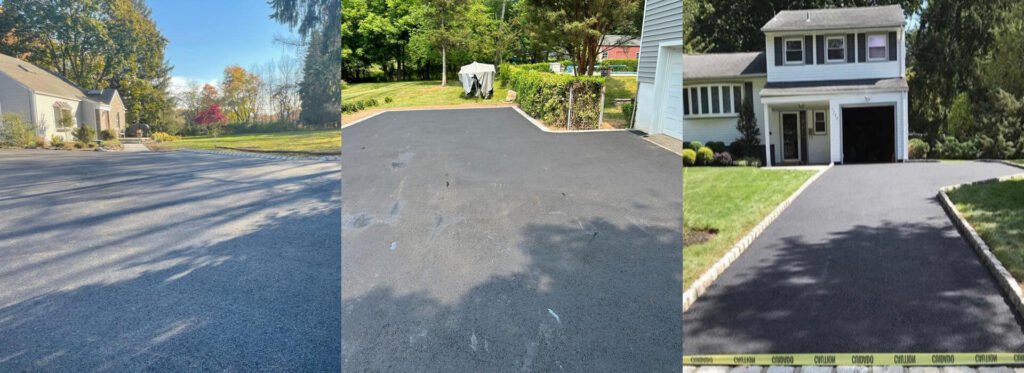
New blacktop driveways, private roads, parking lots, overlays and repairs in Whitehouse Station, NJ, built on a compacted stone base.
Three decades paving NJ properties
Fully licensed NJ contractor
Owner-led, hands-on projects
Written, no-obligation quotes
Whitehouse Station, NJ
Quick answer
Old Irish Paving & Masonry provides asphalt paving in Whitehouse Station, NJ, including new and replacement blacktop driveways, private roads, parking lots, overlays, patching and sealcoating. Typical residential builds include excavation, a 4–6 inch compacted stone base and 2–3 inches of compacted hot-mix asphalt, adjusted to your soil and traffic.
We pave long residential drives, farm lanes and business lots around Whitehouse Station, matching asphalt thickness to the vehicles that use them.
Rural lots with long frontage, farm fields and clay soils mean long driveways and lanes that need a strong base and good drainage. Asphalt is flexible and handles winter plowing and salt well, but only when the base underneath is solid and the surface drains.
Key facts
Problems we solve
These are the issues we’re called about most in Whitehouse Station and nearby Hunterdon County: some are specific to local soils, terrain and housing, others are common across New Jersey.
What you seePotholes, ruts and washouts on long gravel or thin asphalt lanes.
Why it happensLong runs with farm equipment, delivery trucks and runoff from open fields.
How we fix itRegrade and crown, add culverts, build a heavier base and pave with sections sized for the vehicles.
How to prevent itKeep ditches and culverts clear.
What you seeDangerous backing out into fast traffic.
Why it happensDriveways built without turnarounds.
How we fix itAdd a paved turnaround or hammerhead so you can exit forward.
How to prevent itPlan turnarounds into any driveway replacement.
What you seePatios and walks that settle, and driveways that rut.
Why it happensHunterdon clay holding water.
How we fix itGeotextile fabric, deeper stone base and good drainage.
How to prevent itBuild up and pitch surfaces so water leaves quickly.
What you seeThe sides of the driveway are breaking off into the lawn, especially where cars drive close to the edge.
Why it happensAsphalt edges with no support underneath, or with base that stops short of the edge, crack under tire loads. Lawn sprinklers and runoff wash out the soil beside them.
How we fix itWe cut back to solid asphalt, extend and compact the base beyond the paved edge, repave, and often install Belgian block curbing to lock the edge in place.
How to prevent itBuild the base wider than the asphalt, tamp the edges at a bevel, and keep heavy vehicles off the outer foot of the driveway.
What you seeWater pools at the garage door or seeps under it after storms.
Why it happensThe driveway slopes toward the house, has settled near the slab, or there’s simply nowhere for water from a sloped driveway to go.
How we fix itWe regrade the base so water runs away from the house, or install a trench drain across the driveway in front of the garage, piped to daylight or a dry well.
How to prevent itKeep the joint between the driveway and garage slab sealed, and keep downspouts discharging away from the driveway.
What you seeThe driveway has turned light gray, the stones are showing, and it feels rough underfoot.
Why it happensSun (UV), water and road salt oxidize the asphalt binder over time, making the surface brittle and porous.
How we fix itIf the surface is structurally sound, we fill cracks and sealcoat to restore color and protection. If the stone is coming loose (raveling), a 1.5–2″ overlay renews the surface.
How to prevent itSealcoat every 2–3 years starting 6–12 months after paving, and don’t over-seal yearly, which can cause peeling.

Businesses along Route 22 and in Readington Township rely on us for lot paving and maintenance. See commercial paving for details.
Plan with confidence
Reviews
★★★★★
Tom, his son, and their crew replaced our front walkway and steps and repaired a foundation wall on our home. They were here on time every morning and cleaned up before they left for the day. The quality of their work is outstanding.
— Kate L., Google review
★★★★★
I couldn't be happier with the work Old Irish Paving did on my driveway! The team was professional, efficient, and the quality of their work is outstanding. They made the whole process stress-free from start to finish.
— Angel G., Google review
★★★★★
Old Irish put in a patio for us and we are extremely happy with the patio and their service. They were very responsive and got the job done very quickly. The patio and concrete pad underneath our hot tub look amazing!
— Alyssa M., Google review
FAQ
Typically 15–25 years with good base work, drainage, sealcoating every 2–3 years and prompt crack filling.
Only if the base is sound and the surface has minor damage. Otherwise we remove it and rebuild. See paving over old asphalt.
Yes. We grade, base and pave long driveways and farm lanes around Whitehouse Station and Readington, with drainage designed for open fields and heavy equipment.
Usually after 2–3 days, longer in hot weather. Avoid sharp turns while stationary for the first few weeks.
No. Bagged cold patch is a temporary fix. A permanent repair is saw-cut, excavated, rebuilt with compacted stone and filled with hot-mix asphalt.
No. Every 2–3 years is right for most driveways. Sealing too often builds up a film that can crack and peel.
Free, no-obligation quote
Tell us about your driveway, patio, steps or masonry project. Tom or a member of the family will call you back promptly to book a free on-site visit and a written quote.
Prefer to talk? (908) 992-2345