
Family-owned paving & masonry contractor serving New Jersey for 30+ years · Licensed & insured
Serving Middlesex & Middlesex County
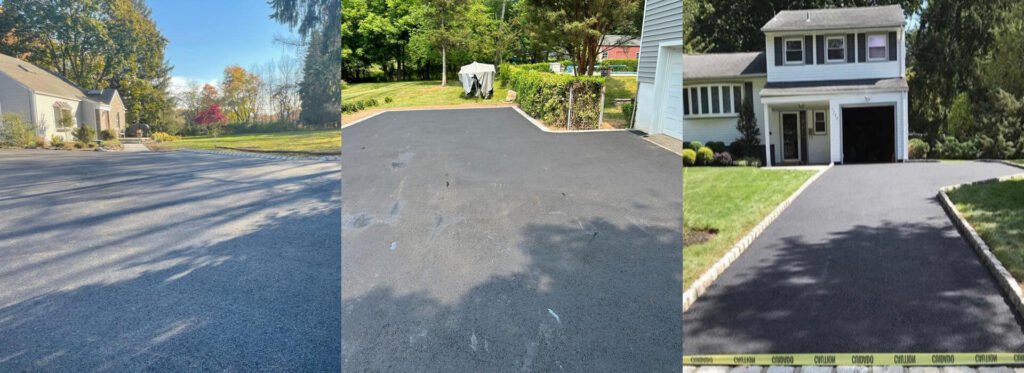
New blacktop driveways, private roads, parking lots, overlays and repairs in Middlesex, NJ, built on a compacted stone base.
Three decades paving NJ properties
Fully licensed NJ contractor
Owner-led, hands-on projects
Written, no-obligation quotes
Middlesex, NJ
Quick answer
Old Irish Paving & Masonry provides asphalt paving in Middlesex, NJ, including new and replacement blacktop driveways, private roads, parking lots, overlays, patching and sealcoating. Typical residential builds include excavation, a 4–6 inch compacted stone base and 2–3 inches of compacted hot-mix asphalt, adjusted to your soil and traffic.
We replace and widen residential asphalt driveways across Middlesex and handle paving for small businesses and multi-family properties.
Flat terrain and the borough’s history of flooding along the Green Brook make drainage and basement water control especially important here. Asphalt is flexible and handles winter plowing and salt well, but only when the base underneath is solid and the surface drains.

Key facts
Problems we solve
These are the issues we’re called about most in Middlesex and nearby Middlesex County: some are specific to local soils, terrain and housing, others are common across New Jersey.
What you seeWet basements, water against foundations and driveways that hold water after storms.
Why it happensFlat terrain near a flood-prone brook, with high groundwater during heavy storms.
How we fix itRe-pitching driveways and patios away from the house, extending downspouts, and interior drainage with sump pumps and battery backups.
How to prevent itTest sump pumps before storm season and keep drains clear.
What you seeCars parked on the street or lawn, and narrow cracked drives.
Why it happensPost-war lots designed for one car.
How we fix itWidening within borough rules and replacing on a proper base.
How to prevent itAsk us to check the width rules before you plan.
What you seePatches of coating missing from the foundation exterior.
Why it happensAge and moisture on older homes.
How we fix itRemove loose parging and re-parge on a prepared surface, fixing grading so water drains away.
How to prevent itKeep mulch and soil below the parging line.
What you seeHoles that you or a previous contractor filled with cold patch, only for them to reopen after the next freeze.
Why it happensCold patch from a bag doesn’t bond or compact properly, and the soft base underneath is still holding water. Each freeze-thaw cycle pops the patch out.
How we fix itA permanent repair is cut square, excavated to firm material, rebuilt with compacted stone, tack-coated and filled with hot-mix asphalt rolled flush.
How to prevent itFix potholes in the warm season with hot mix, and make sure water drains off the surface instead of sitting in low spots.
What you seeChunks of asphalt are pushed onto the lawn every winter, and the edges get rougher each year.
Why it happensUnsupported asphalt edges, and plow blades set too low.
How we fix itWe rebuild the edges on a wider base and install Belgian block curbing as a solid, plow-resistant border.
How to prevent itMark the edges with stakes before winter and ask your plow service to use a shoe or rubber edge.
What you seeWater ponds near the garage door, along the edges or in tire ruts long after the rain stops.
Why it happensThe driveway was graded flat or sloped the wrong way, or the base has settled in spots. Standing water seeps into cracks and accelerates every other kind of damage.
How we fix itSmall birdbaths can sometimes be corrected with an infrared or hot-mix leveling patch. Where the overall pitch is wrong, the surface has to come out so the base can be regraded, sometimes with a trench drain or dry well added.
How to prevent itPitch matters most at installation. Ask any contractor exactly where water will go before they pave.
| Layer | What we do | Why it matters |
|---|---|---|
| Subgrade | Excavate soft soil, grade for drainage | Prevents sinking and puddles |
| Fabric | Geotextile over soft clay (when needed) | Keeps stone from pushing into the soil |
| Stone base | 4–6″+ quarry-processed stone, compacted | Carries the load and resists frost |
| Asphalt | 2–3″+ hot mix, rolled hot | Dense, smooth, watertight surface |
Our process
Tom or a family member walks the property, measures, checks drainage and talks through materials and budget.
You get a clear, itemised quote covering excavation, base depth, materials, finish and clean-up. No pressure.
Our own crew excavates, builds the compacted base and installs the surface using quality materials.
We clean up, walk the finished job with you, explain aftercare and stand behind the work.
Small businesses and multi-family properties in Middlesex use us for parking area repairs, sealcoating and paving. See commercial paving for details.
Plan with confidence
Reviews
★★★★★
Last fall the Old Irish Paving crew repaired our front slate porch and our paver walkway and they did a great job! They came back to complete a minor repair and we are very happy. We are considering using them again for another project.
— Kathleen N., Google review
★★★★★
Wow! What an amazing paving & masonry company. This family-owned company is so knowledgeable and professional. The team gave our home such a clean and upgraded look.
— John Q., Google review
★★★★★
We just had our driveway and front walkway paved and outlined in Belgian block by Old Irish. The company handled the project with very good expertise and experience. The crew was hardworking and went the extra mile, ensuring we were satisfied with the project details from start to finish.
— James M., Google review
FAQ
Typically 15–25 years with good base work, drainage, sealcoating every 2–3 years and prompt crack filling.
Only if the base is sound and the surface has minor damage. Otherwise we remove it and rebuild. See paving over old asphalt.
Yes. Along with paving, we provide basement waterproofing and drainage corrections such as regrading, downspout extensions and re-pitching driveways and patios away from the house.
Usually after 2–3 days, longer in hot weather. Avoid sharp turns while stationary for the first few weeks.
Most recurring cracks come from water getting into the base, not from the asphalt itself. Seal cracks while they’re small, fix drainage, and if alligator cracking has spread, rebuild the base in that area.
No. Bagged cold patch is a temporary fix. A permanent repair is saw-cut, excavated, rebuilt with compacted stone and filled with hot-mix asphalt.
Free, no-obligation quote
Tell us about your driveway, patio, steps or masonry project. Tom or a member of the family will call you back promptly to book a free on-site visit and a written quote.
Prefer to talk? (908) 992-2345